
Personality Symbols: Using Visual Icons to Represent Character Traits

Introduction
When we interact with others, we are constantly trying to make sense of who they are. We look for cues in their tone, their facial expressions, and their actions to build a mental map of their character. In the digital age, this process of “mapping” has moved from purely psychological intuition to visual shorthand. We use personality symbols—icons, avatars, and visual markers—to quickly communicate complex human traits in apps, profiles, and professional presentations.
Understanding these symbols isn’t just about graphic design; it’s about understanding how we categorize human behavior. By recognizing the visual “shorthand” used to represent personality, we can better grasp how people present themselves to the world and how we, in turn, attempt to simplify the immense complexity of human character into recognizable patterns.
The Difference Between a Person and a Persona
One of the most important distinctions to make when discussing personality symbols is the difference between an individual’s true character and their “persona.” According to 1, visual tools often differentiate between a general “person” and a specific “persona.”
In a psychological context, this is a vital distinction:
- The Individual: The full, complex, and often contradictory set of traits, histories, and emotions that make up a human being.
- The Persona: A curated, outward-facing version of a person. In digital design, a personality icon often represents this persona—the version of a person that is optimized for a specific social or professional interaction.
When you see a personality icon in an app or a profile, you aren’t seeing the whole person; you are seeing a simplified “characterization” designed to communicate a specific vibe or role 2. This is similar to how we use “brand personas” in marketing to represent a specific set of values rather than a living, breathing human.
How Personality is Symbolized Visually
Personality is too broad to be captured by a single image, so creators use various design styles to convey different “temperaments.” The way a symbol is drawn can change how we perceive the trait it represents 2. For example:
- Line Art and Minimalist Icons: These often represent logic, clarity, or professional stability. They feel clean and objective.
- Hand-Drawn or Organic Styles: These can communicate warmth, creativity, or emotional sensitivity. They feel more “human” and less structured.
- Solid and Bold Shapes: These are frequently used to symbolize strength, assertiveness, or extroversion.
- Color and Shape Customization: Digital assets used to symbolize personality are often customized. For instance, soft curves and pastel colors might be used to represent empathy, while sharp angles and high-contrast colors might represent high energy or aggression 2.
Common Examples of Personality Symbols
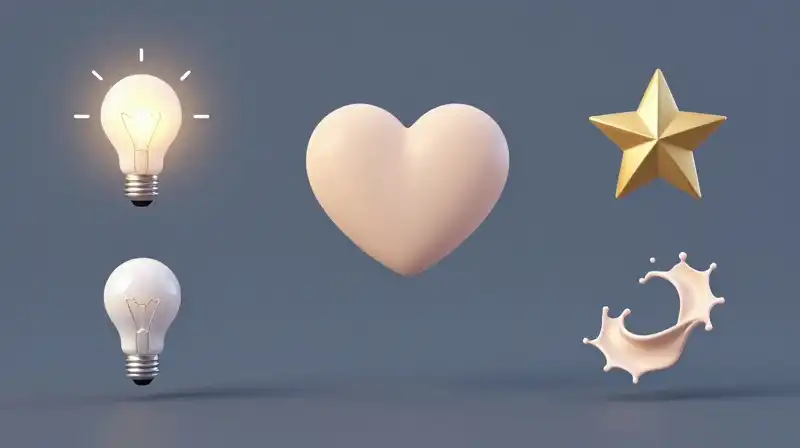
People often ask, “What are examples of personality symbols?” While there is no single universal dictionary, certain archetypes and traits are commonly represented through specific visual shorthand in professional and social digital environments.
| Trait/Archetype | Common Visual Symbolism | Perceived “Vibe” |
|---|---|---|
| The Thinker/Analyst | Lightbulbs, gears, or minimalist geometric shapes. | Logical, structured, and problem-solving. |
| The Empath/Nurturer | Hearts, soft circles, or organic leaf shapes. | Warm, supportive, and emotionally driven. |
| The Leader/Achiever | Stars, crowns, or upward-pointing arrows. | Ambitious, decisive, and authoritative. |
| The Creative/Expressive | Paintbrushes, splashes, or irregular, hand-drawn lines. | Unconventional, fluid, and imaginative. |
Recognizing Patterns in Real Life vs. Digital Icons
While personality icons provide a rapid way to communicate complex traits in a digital interface 2, we must be careful not to mistake these simplified symbols for the reality of human psychology. In real life, personality is rarely as neat as a set of icons.
In Digital Spaces: Personality icons act as a “shorthand.” They allow for the rapid communication of traits in presentation software or app interfaces, helping users identify archetypes at a glance (2, 1).
In Human Dynamics: Real personality is found in the nuances—the way a person reacts under stress, how they treat those who can do nothing for them, and the consistency of their actions over time. A “leader” icon might suggest authority, but in real life, true leadership involves empathy and situational awareness that a simple symbol cannot capture.
Practical Takeaways: Using Visual Cues Wisely
Whether you are designing a profile, building a brand, or simply trying to understand how people are perceiving you, keep these principles in mind:
- Intentionality matters: If you are using visual symbols to represent yourself (such as in a bio or a presentation), choose styles that match your actual temperament. If you want to appear approachable, avoid overly sharp, rigid, or aggressive imagery.
- Avoid “Flattening”: Remember that a persona is not a person. When you meet someone new, don’t let their “visual brand” or their curated digital persona prevent you from seeing their actual character.
- Observe the “Feel”: When looking at how others represent themselves, pay attention to the style of their symbols. Are they using “solid” icons to project strength, or “hand-drawn” icons to project authenticity? This can give you a clue about how they wish to be perceived.
Note: Recognizing personality patterns through visual cues or behavioral observations is a tool for social awareness, not a method for clinical diagnosis. If you are concerned about personality disorders or significant behavioral issues in yourself or others, please consult a mental health professional.
References
Footnotes
Frequently Asked Questions
What are examples of personality symbols?
Examples of personality symbols include icons, avatars, and visual markers such as lightbulbs, gears, hearts, stars, crowns, and paintbrushes. They also include design styles like line art, hand-drawn shapes, and specific color or shape customizations.
Related Articles