
Dark Empath Meaning: Understanding the Link Between Empathy and Manipulation


Introduction
We are often taught that empathy is a superpower—a purely positive trait that allows us to connect with others and act with kindness. But what happens when that ability to “read” someone is paired with more predatory personality traits? This is the core of the dark empath meaning: a personality profile that combines high social intelligence with the “Dark Triad” of narcissism, Machiavellianism, and psychopathy [1].
If you have ever felt like someone was being incredibly supportive and “in tune” with your feelings, only to realize later that they used your vulnerabilities against you, you may have been interacting with a dark empath. Unlike a typical narcissist who might be overtly blunt or insensitive, a dark empath uses their understanding of your emotions as a strategic tool to influence, steer, or dominate your behavior [2].
Understanding the Mechanics: Cognitive vs. Affective Empathy
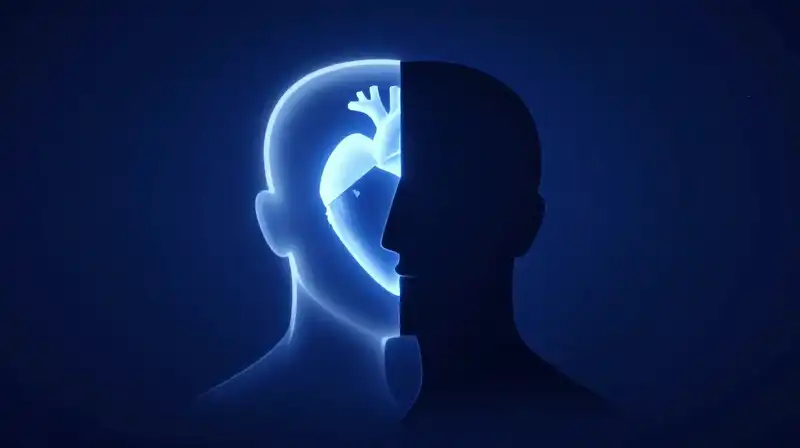
To understand how someone can be both “empathic” and “dark,” we have to distinguish between the two main ways the human brain processes the emotions of others. The dark empath’s power lies in an imbalance between these two types:
- Cognitive Empathy (The “Head”): This is the intellectual ability to recognize and understand what another person is thinking or feeling. It is a data-gathering skill. Dark empaths excel here; they can “read the room” and decode your subtle emotional cues with high precision [1, 2].
- Affective Empathy (The “Heart”): This is the ability to actually feel the emotions of another person—to experience a sense of shared distress or joy. Dark empaths typically lack this component [1, 2].
Because they have high cognitive empathy but low affective empathy, they can navigate complex social situations and appear deeply charismatic. They know exactly what to say to make you feel seen, but they don’t actually “feel” the weight of your pain, which allows them to remain detached while they manipulate the interaction [1, 2].
5 Signs of a Dark Empath in Real Life
Because dark empaths are often more socially engaged and charming than traditional members of the Dark Triad, they can be much harder to spot. They don’t always act like “villains”; they often act like your best friend or the most insightful person in the room. Watch for these behavioral patterns:
- Strategic Charm and Flattery: They use their ability to read your needs to provide exactly the kind of validation you crave. This isn’t just kindness; it is a way to build rapid trust and lower your defenses [1, 2].
- Emotional “Hot and Cold” Dynamics: They may be intensely emotionally available one moment, only to suddenly withdraw or become cold when you are no longer useful to their immediate goal [1].
- Subtle Emotional Pressure: Instead of making demands, they use your own feelings against you. They might employ guilt, fear, or subtle emotional leverage to steer a conversation or get their way [1, 2].
- Reframing Your Reality: In a disagreement, they may use their insight into your psyche to “reframe” your concerns in a way that makes you doubt your own perceptions or feel confused [1].
- Intellectualized Connection: While they can discuss emotions deeply, the connection often feels “managed.” You might feel like they are performing empathy rather than experiencing it [1].
Dark Empath vs. Narcissist

It is common to confuse these two, especially since they share traits like narcissism and Machiavellianism. However, the primary difference lies in their social presentation and how they use their “social radar.”
| Feature | Typical Narcissist | Dark Empath |
|---|---|---|
| Social Style | Often overt, can be blunt or even insensitive to others’ feelings. | Often charismatic, socially adept, and appears highly insightful. |
| Empathy Usage | May struggle to understand others’ perspectives entirely. | Highly understands perspectives (Cognitive Empathy) to use them strategically. |
| Detection | Easier to spot due to ego and lack of social nuance. | Harder to detect early on because they “get” people so well. |
Common Questions
Do dark empaths have high IQ?
While there isn’t a direct clinical rule stating that dark empaths must have a high IQ, the trait is closely linked to high emotional intelligence (EQ) and cognitive ability. To successfully navigate social hierarchies and use subtle manipulation without being caught, a certain level of intellectual and social sophistication is usually required [1].
Is “dark empath” a real scientific diagnosis?
It is important to note that “dark empath” is not a formal clinical diagnosis found in the DSM-5. Within the psychological community, there is ongoing debate. Some researchers see it as a useful way to describe a specific personality profile, while others argue it is a “pop psychology” term that lacks the scientific consensus required for a formal diagnosis [3, 1]. It is best viewed as a way to describe a specific pattern of behavior rather than a medical condition.
How to Protect Your Emotional Boundaries

If you realize you are in a relationship—whether romantic, professional, or platonic—with someone displaying these traits, the goal is to minimize their ability to influence your emotional state through manipulation. Practical steps include:
- Set Firm Emotional Boundaries: Be clear about what topics are off-limits and what behaviors you will not tolerate. If a conversation starts to feel like it’s being “steered” or used to make you feel guilty, step back [1].
- Maintain Communication Clarity: Avoid ambiguous language. Stick to facts and clear statements to prevent them from “reframing” your words or intentions [1].
- Practice “Information Dieting”: Be cautious about sharing your deepest vulnerabilities or sensitive personal information. Since a dark empath can use your emotional “map” to navigate you, limiting the data they have on your triggers is a form of self-protection [1].
- Trust Your Intuition: If a relationship feels “off” despite the person being outwardly kind or insightful, pay attention to that feeling. Often, our gut senses the lack of genuine affective empathy before our logic can explain it.
Disclaimer: This article is for informational purposes and describes personality patterns. It is not a substitute for professional mental health advice, diagnosis, or treatment. If you are in an abusive situation, please seek help from a qualified professional or local authorities.
References
Footnotes
Frequently Asked Questions
Do dark empaths have high IQ?
There is no direct clinical rule stating dark empaths must have a high IQ, but the trait is closely linked to high cognitive ability and emotional intelligence. A certain level of intellectual and social sophistication is usually required to use subtle manipulation successfully.
How to Protect Your Emotional Boundaries
Set Firm Emotional Boundaries
Be clear about what topics are off-limits and what behaviors you will not tolerate. If a conversation starts to feel like it's being "steered" or used to make you feel guilty, step back.
Maintain Communication Clarity
Avoid ambiguous language. Stick to facts and clear statements to prevent them from "reframing" your words or intentions.
Practice "Information Dieting"
Be cautious about sharing your deepest vulnerabilities or sensitive personal information. Limiting the data they have on your triggers is a form of self-protection.
Trust Your Intuition
If a relationship feels "off" despite the person being outwardly kind or insightful, pay attention to that feeling. Often, our gut senses the lack of genuine affective empathy before our logic can explain it.
Related Articles