
Do Narcissists Have Friends? The Truth About Their Social Circles


Introduction
If you have ever been close to someone with narcissistic traits, you might have been confused by their social life. On one hand, they may seem to be the life of the party, surrounded by a rotating cast of admirers and acquaintances. On the other hand, you might notice a strange lack of depth in their connections, or perhaps you’ve wondered how they can have so many “friends” while simultaneously making those around them feel isolated or undervalued.
The short answer to “do narcissists have friends?” is yes, but the definition of “friend” often differs significantly from the way most people understand it. While a neurotypical person typically seeks out friendships based on mutual vulnerability, shared values, and emotional safety, a person with narcissistic tendencies often views social circles through a lens of utility, status, and image management. Understanding this distinction is vital if you are trying to navigate a relationship with a narcissistic friend, partner, or family member.
The “Smoke and Mirrors” Social Circle

To an outside observer, a narcissist may appear to have a thriving, expansive social life. However, research and anecdotal observations suggest these connections are often “smoke and mirrors,” consisting of a high volume of acquaintances rather than a small, stable group of people who truly know and support one another 1.
Rather than building deep emotional intimacy, narcissists often engage in a form of “social collecting.” They may seek out individuals who serve specific roles, such as:
- Trophies: People who enhance the narcissist’s perceived social status or aesthetic.
- Activity Buddies: Individuals used solely for shared hobbies, networking, or professional gain, without any real emotional bond (1, 2).
- Audience Members: People who provide the constant stream of admiration and validation the narcissist requires to maintain their self-esteem.
Because these relationships are often conditional—existing only as long as the other person serves a specific purpose—the social circle can feel “precarious” or superficial 1. When the “utility” of a person runs out, the narcissist may abruptly end the connection, leaving behind a trail of discarded “friends.”
Why They Can Charm, But Not Connect
A major reason narcissists can maintain large social circles is their ability to use cognitive empathy. This is the intellectual ability to read social cues, understand what someone else is thinking, and mimic the “correct” emotional response 1. This allows them to appear incredibly charming, warm, and attentive during initial interactions.
The disconnect occurs because they often lack emotional empathy—the actual ability to feel what another person is feeling or to genuinely care about their well-being 1. This creates a “chameleon-like” effect where they tailor their personality to suit whichever audience they are currently facing 1. While this makes them excellent at winning people over initially, it makes long-term, authentic bonding nearly impossible, as the relationship is built on a performance rather than a person.
The Role of Enablers and Flying Monkeys
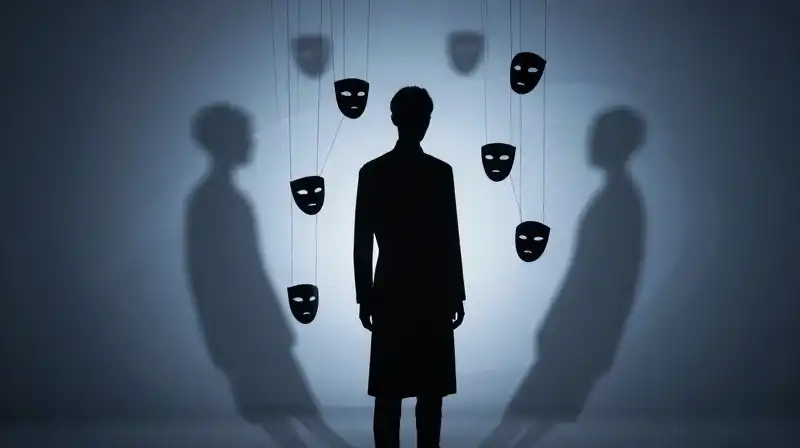
In many narcissistic social circles, the group dynamic is not one of mutual support, but rather one of protection for the narcissist’s ego. You may notice two specific roles emerging within their circle:
- Enablers: These are friends who may excuse or minimize the narcissist’s harmful behavior. They often only see the “mask”—the flattering, charming surface persona—and ignore the reality of how the narcissist treats those closest to them 1.
- Flying Monkeys: A term often used to describe individuals who act as a support system for the narcissist’s manipulation. They might provide alibis, spread flattery, or create cover stories to protect the narcissist from the consequences of their actions 1.
Narcissists may also use a tactic called triangulation. This involves bringing a third party into a conflict to validate their version of events or to undermine a partner, effectively using “friends” as pawns to maintain control 1.
Friendship Styles: Authentic vs. Narcissistic
To help recognize these patterns in your own life, it is useful to compare how healthy social connections differ from the dynamics often found in narcissistic circles.
| Feature | Authentic Friendship | Narcissistic “Friendship” |
|---|---|---|
| Core Purpose | Mutual support and shared growth. | Status, utility, or ego validation. |
| Vulnerability | A safe space to be imperfect. | Viewed as a weakness to be exploited. |
| Consistency | Stable and reliable over time. | Conditional and “precarious” 1. |
| Emotional Depth | Based on emotional empathy. | Based on cognitive empathy and mimicry 1. |
Common Questions About Narcissistic Socializing

Do male or female narcissists have different social patterns?
While the underlying mechanics of narcissistic supply remain similar, social expressions can vary. For example, a narcissistic female friend might use social maneuvering or “relational aggression” to maintain dominance within a group, whereas a male narcissist might focus more on status and networking through professional or hobby-based circles. Regardless of gender, the core issue remains a lack of genuine intimacy.
Can narcissists have long-term friends?
It is possible, but these friendships often follow specific patterns. They may consist of people who have become “enablers” over many years, or people who are content to remain at a superficial “activity buddy” level where deep emotional demands are never made 1.
Why do social interactions with them feel so tiring?
Interacting with a narcissist can feel “fake” or exhausting because there is no true bonding taking place. Because the narcissist often has to “restart” their social performance every time you reconnect, the interaction lacks the ease of a relationship built on genuine, shared history 1.
Recognizing the Pattern
If you are trying to determine if a friend’s behavior is narcissistic or simply a different personality style, look past the initial charm. Focus on the consistency of their empathy and the safety of the connection.
Ask yourself:
- Do I feel “seen” and heard, or do I feel like I am just part of an audience?
- Is this person able to handle my vulnerability, or do they use it against me?
- Do their friends seem to actually know them, or are they all just participating in a performance?
Recognizing these patterns is not about making a clinical diagnosis—only a professional can do that—but about understanding the reality of your social environment. If a relationship feels transactional, exhausting, or one-sided, it may be because you are interacting with a “mask” rather than a person.
References
Footnotes
Related Articles