Do Narcissists Know They Hurt You? Understanding Their Awareness


Introduction
When you are caught in the cycle of a difficult relationship, one question often loops endlessly in your mind: “Do they actually know they are hurting me?” It is a question born out of a desperate hope for accountability. If they know they are causing pain, perhaps they can be reasoned with; if they don’t, perhaps they are simply misguided.
The reality is more complex than a simple yes or no. There is no single consensus among experts on whether narcissists are fully aware of the harm they cause (1, 2, 3). Some patterns suggest a high level of calculated intent, while others point toward a profound, structural inability to grasp the emotional reality of others. Understanding this distinction isn’t about finding an excuse for the behavior—it is about helping you stop waiting for an apology that may never come and recognizing the reality of the dynamic you are actually living in.
The Spectrum of Awareness: Obliviousness vs. Intent

Rather than viewing narcissism as a monolith, it is more helpful to see awareness as a spectrum. Experts suggest that many individuals fall into a state of “partial awareness” 1. This means they might recognize that their actions cause distress, but they lack the emotional capacity to truly feel or comprehend the depth of that impact.
To better understand how this shows up in real life, we can look at the different ways awareness manifests across different personality profiles:
| Type of Narcissistic Pattern | Typical Awareness Level | How it Manifests |
|---|---|---|
| Grandiose | Lower/Limited | They may genuinely believe they are superior and that any “harm” they cause is simply a necessary byproduct of their greatness or a deserved reaction to others 1. |
| Covert | Moderate/Selective | They often maintain a “virtuous” or victimized image in public while being privately abusive, suggesting they know how to navigate social norms 1. |
| Malignant | Higher/Calculated | These individuals may show a higher level of deliberate harm, sometimes using cruelty to establish power or control 1. |
Signs That the Behavior is Intentional
While some argue that narcissists are simply “wired” to be hurtful or are lost in extreme self-delusion 1, there are specific behaviors that suggest a high level of social intelligence and calculated choice. When a person can switch their behavior based on their audience, it indicates they understand social consequences.
- Selective Abuse: If a person is charming, kind, and socially acceptable in public but becomes cold or cruel the moment the door closes, they are demonstrating “selective abuse.” This ability to regulate their behavior proves they know what “appropriate” behavior looks like 1.
- Precision Manipulation: Tactics like triangulation (using a third person to create jealousy) or love-bombing (showering someone with intense affection to gain influence) require careful observation of a person’s vulnerabilities. This level of precision suggests the person is making conscious, strategic moves 1.
- Intermittent Reinforcement: The “Jekyll and Hyde” pattern—shifting rapidly from intense affection to sudden devaluation—is often a strategic cycle used to establish emotional control rather than a series of random outbursts 1.
- Calculated Apologies: Sometimes, a heartfelt apology is offered not because the person has changed, but as a tactical move to end a conflict and regain stability 1.
The “Object” Problem: Why Empathy is Missing
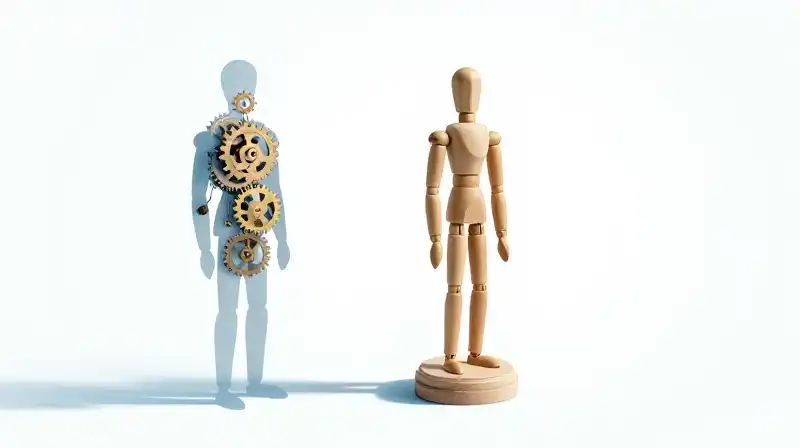
A major reason why narcissists may seem “oblivious” to your pain is not necessarily that they don’t see the tears, but that they don’t see the person crying. Some observers argue that narcissists do not view others as complex, feeling human beings 1.
Instead, they may view people as:
- “Vending Machines”: People exist solely to provide a specific “output,” such as admiration, money, or sex. When the machine stops providing, the person is discarded 1.
- “NPCs” (Non-Player Characters): A term used to describe people who lack their own agency or depth, serving only to fill a role in the narcissist’s personal narrative 1.
When you view someone as a tool rather than a human, their pain becomes an inconvenience or a nuisance rather than a reason to stop. This is why they may lack the empathy to care about the suffering they cause, even if they logically understand that the suffering is happening 1.
How They Avoid Accountability
Even when confronted with the reality of their actions, narcissists often use psychological defense mechanisms to protect their fragile self-image. This makes it incredibly difficult to reach a point of genuine understanding or change 1.
- Gaslighting: Denying your reality to make you doubt your own perceptions (“I never said that,” or “You’re being too sensitive”).
- Projection: Accusing you of the very behaviors they are currently exhibiting to shift the guilt away from themselves 1.
- Minimization: Downplaying the impact of their actions (“It wasn’t that big of a deal,” or “You’re overreacting”).
- Cognitive Dissonance: Because their “false self” is built on being superior or good, they cannot integrate the reality of being “harmful” into their identity without facing overwhelming shame 1.
Moving Forward: What to Watch For

If you are asking “do narcissists know they hurt you,” you are likely looking for a sign that things can get better through communication. However, the research suggests that relying on their “awareness” to change the relationship is a high-risk strategy.
Key takeaways to remember:
- Focus on impact, not intent: Whether they “meant” to hurt you or were simply “oblivious” does not change the fact that you are being hurt. Your healing should be based on the reality of the harm, not the perceived intent of the other person.
- Watch for the “Switch”: Pay attention to how they treat people in public versus private. This is the most reliable indicator of whether they understand social and moral norms.
- Recognize the cycle: If you see a pattern of love-bombing followed by devaluation, realize this is often a mechanism of control, not a sign of “coming back to their senses.”
Note: This article is intended for educational purposes to help recognize behavioral patterns. It is not a diagnostic tool. If you are in an abusive situation, please seek support from a qualified mental health professional or domestic violence resource.
References
Footnotes
Related Articles