
Personality Identification Playing Cards: Intelligence Tools of Iraq


Introduction
If you have ever found yourself staring at a deck of playing cards and wondered why the faces on them look so unfamiliar—or why certain political figures seem to occupy the place of a King or an Ace—you might be looking at a piece of psychological history. While we usually think of playing cards as tools for leisure, they have occasionally been repurposed as high-stakes tools for human identification and situational awareness.
The “personality identification playing cards” are not your standard poker deck. They were a specialized intelligence tool designed to help individuals recognize specific people in high-pressure, chaotic environments. By understanding how these cards work, we can learn a lot about how the human brain processes “personality profiles” and how information is integrated into our routine cognitive habits.
The Intelligence Behind the Deck
The most famous iteration of these decks was developed by the U.S. Defense Intelligence Agency during the 2003 invasion of Iraq 1. The goal was highly practical: soldiers needed to identify high-ranking members of Saddam Hussein’s government quickly and accurately. However, memorizing a list of names and faces from a manual is difficult under stress. Instead, intelligence agencies utilized a method of integrating critical data into a low-stress, familiar environment: a game of cards.
This wasn’t just a way to pass the time. According to 2, the decks served a dual purpose of recreation and intelligence gathering. By using a familiar object like a deck of cards, troops could reinforce facial recognition of “most wanted” individuals through repetitive, casual exposure. This turns a passive learning task into a subconscious process of familiarity.
How the Deck is Structured
To make the memorization process as effective as possible, the hierarchy of the deck was not random. It was designed to mirror the actual political importance of the targets. This creates a psychological “map” where the value of the card correlates to the importance of the individual.
- The Hierarchy of Importance: For example, the Ace of Spades was assigned to Saddam Hussein, marking him as the highest priority target 1.
- Categorization: The cards are organized into specific groups to help the user categorize the “personalities” they are seeing.
- Data Accuracy: Because these were tools for real-world identification, the profiles were built using “open sources” and multi-agency collaboration to ensure the faces and titles presented were accurate 1.
What are the 4 card categories?
While specific layouts can vary depending on the edition of the deck, these identification decks typically group individuals by their roles or levels of influence within the target government. This allows a person to categorize a “personality” into a specific functional group (such as political leaders, military officials, or intelligence officers) the moment they see a face, helping them understand the threat level or social standing of that individual in a real-world context.
A Pattern of Tactical Identification
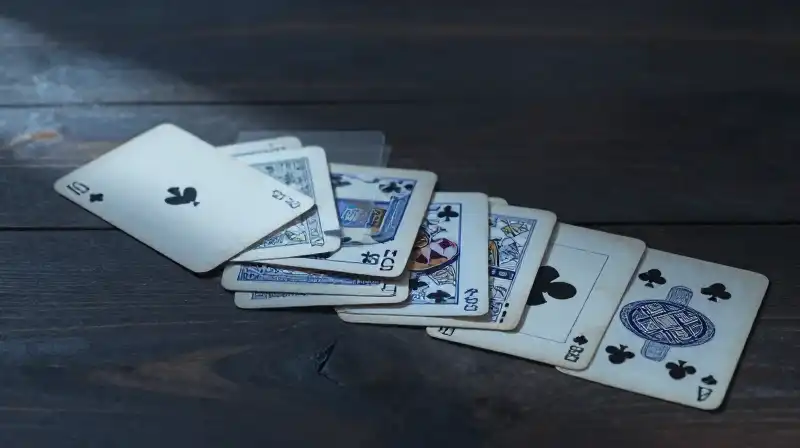
The use of playing cards for personality identification is not a modern invention unique to the Iraq War. It is part of a long-standing historical precedent where intelligence needs met psychological conditioning. Similar methods have been reported during several major conflicts, including the US Civil War, World War II, and the Korean War 1.
In each instance, the logic remains the same: take a high-stakes, difficult-to-memorize set of faces and hide them within a low-stakes, easy-to-manipulate system. It turns “studying” into “playing.”
Collectors and Modern Variations
Today, these decks are rarely used for their original tactical purpose. Instead, they have moved into the realm of historical artifacts. If you encounter these decks in the wild, you will find two distinct types of interest:
- Historical/Collector Value: Collectors and historians often value these decks because of their direct connection to specific geopolitical eras 1. They serve as tangible links to the intelligence strategies of the time.
- Updated Versions: There are higher-quality, plastic-coated versions available that include updated bounty values and the current statuses of the individuals listed 1. These are often treated more as decorative decks or novelty items than active intelligence tools.
The Psychological Takeaway

While you likely won’t be using a deck of cards to identify high-ranking officials in your daily life, the “personality identification playing cards” offer a profound lesson in how we learn. They demonstrate that context matters.
When we want to master a complex set of information—whether it is new professional faces, social cues, or complex data—we shouldn’t always try to brute-force it through dry study. Instead, we can look for ways to integrate that information into our existing “mental decks”—the familiar routines and hobbies we already possess. By making the learning process low-stress and repetitive, we allow our brains to build familiarity naturally.
References
Footnotes
Frequently Asked Questions
What are the 4 card categories?
The article does not list four specific card categories, but notes that individuals are typically grouped by roles such as political leaders, military officials, or intelligence officers.
Related Articles