Why Empaths and Narcissists Are Drawn to Each Other


Introduction
It often feels like a cosmic mistake: how can someone so deeply caring and sensitive end up repeatedly drawn to someone so self-centered and emotionally unavailable? If you identify as an empath, you may feel like you have a “magnet” for narcissists, leading to exhausting cycles of giving and receiving nothing in return. This isn’t a coincidence or a lack of intelligence; it is often a complex psychological pull rooted in shared history and survival mechanisms.
The attraction between empaths and narcissists is frequently driven by a shared foundation of childhood trauma. While both parties may have experienced instability, they respond to that trauma in opposite directions: narcissists may become self-obsessed as a way to protect themselves, while empaths may develop hyper-vigilance and self-sacrificing tendencies to avoid causing pain or conflict (1, 2). Understanding this dynamic is the first step toward breaking the loop.
Two Sides of the Same Coin: The Shared Trauma Root
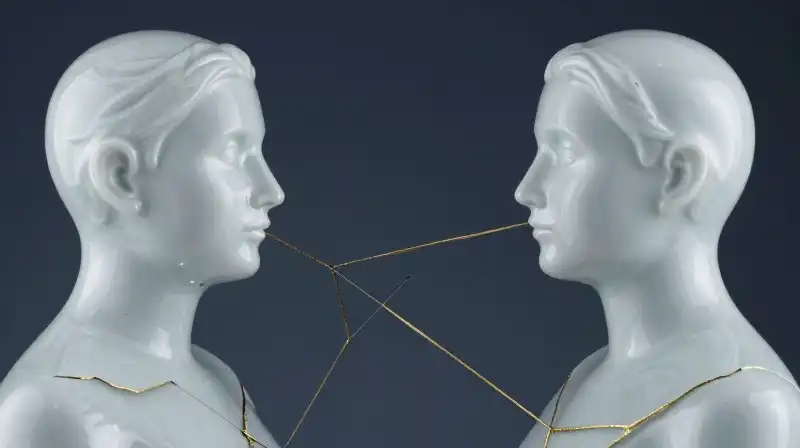
Rather than being polar opposites, empaths and narcissists can be viewed as two different responses to similar emotional injuries (1, 2). Instead of being born with innate “superpowers,” many people who identify as empaths have actually developed an extreme sensitivity to emotional shifts as a defense mechanism. This often happens in unstable or abusive households where “reading the room” was a necessary tool for survival 1.
This shared background creates a subconscious familiarity. The narcissist seeks someone who will provide the validation they lack, while the empath seeks someone they can “save,” subconsciously attempting to provide the very care and stability they themselves lacked in childhood (1, 2).
The Cycle of Attraction and Manipulation
The relationship between these two types rarely starts with conflict. Instead, it often begins with a powerful, intoxicating connection that eventually shifts into a dysfunctional loop.
The Initial Hook
Narcissists often utilize a “charming and loving” facade during the early stages of a relationship. This stage is designed to “hook” the empath by mirroring their values and intensity (2, 3). For the empath, this feels like finding a soulmate who finally “gets” them, making them more likely to overlook early red flags.
The “Fixer” Trap
A common pattern occurs when the empath attempts to “fix” or “heal” the narcissist. The empath offers deep emotional labor, believing that if they just love the narcissist enough, the narcissist’s underlying pain will vanish (1, 2). This creates a self-sustaining cycle where the narcissist relies on the empath for constant validation, while the empath’s sense of self-worth becomes dangerously tied to how much they can sacrifice (1, 2).
The Trauma Bond
When the narcissist eventually reverts to volatile or abusive behaviors—often triggered when the empath attempts to set a boundary or says “no”—the empath may experience a “trauma bond” (2, 3). This is a psychological phenomenon where the empath feels compelled to give second chances because the narcissist provides temporary displays of improved behavior, acting as a “reward” that keeps the empath from leaving 1.
Identifying the Narcissist: Covert vs. Grandiose

Not all narcissists present themselves in the same way. Empaths are statistically more likely to be drawn to a specific type that mimics their own sensitivity.
| Feature | Grandiose Narcissist | Covert (Vulnerable) Narcissist |
|---|---|---|
| Primary Trait | Overt charm, high confidence, and dominance. | Victim mentality, sensitivity, and quiet resentment. |
| How they appear | Extroverted, loud, and often seeking the spotlight. | Misunderstood, fragile, or “wounded.” |
| Empath Attraction | May be attracted to the strength/charisma. | Most common: Attracted to the perceived “brokenness” they feel they can heal 1. |
A Crucial Distinction: Healthy Empathy vs. Trauma-Rooted Empathy
It is important to distinguish between genuine empathy and empathy that is rooted in unresolved trauma. While they may look similar on the surface, their foundations are very different:
- Healthy Empathy: Driven by a genuine desire to connect and understand others while maintaining clear personal boundaries.
- Trauma-Rooted Empathy: Often unstable because it is used as a way to bypass one’s own pain or to “keep the peace” in an attempt to manage the emotions of others 1.
Signs of a Narcissistic Dynamic in Your Life

If you are questioning a relationship, look for these concrete patterns of imbalance rather than focusing solely on the other person’s personality 1:
- Lack of Reciprocity: You find yourself providing constant emotional support, listening, and care, but you receive little to no support in return when you are struggling.
- Boundary Testing: Every time you try to set a limit (e.g., “I can’t talk about this right now” or “I need space”), the person pushes harder or uses guilt to bypass that limit.
- The “Moving Goalpost” of Accountability: You attempt to discuss issues, but the conversation always shifts to your faults, or the person offers apologies that are never followed by actual change.
Frequently Asked Questions
Do narcissists and empaths get along?
In the short term, they often appear to get along exceptionally well due to the initial “love bombing” or charming phase. However, in the long term, the dynamic is typically characterized by high conflict and emotional exhaustion because the relationship is built on an imbalance of needs rather than mutual respect.
Moving Forward: Protecting Your Energy

Because narcissists often have significant gaps in self-awareness, they are frequently unlikely to initiate therapy or change their behavior. This means the responsibility for identifying the dysfunction and seeking help often falls on the empath 1.
To protect yourself, consider these practical steps:
- Maintain an “outsider’s perspective”: Try to observe the relationship as if you were a neutral third party. This helps prevent you from being blinded by the narcissist’s initial facade.
- Set firm, non-negotiable boundaries: Recognize that a boundary is not a suggestion; it is a requirement for your well-being.
- Stop trying to “soothe” the ego: Understand that soothing a narcissist’s ego rarely leads to lasting accountability; it usually only reinforces their behavior.
Note: Recognizing these patterns is an educational tool, not a clinical diagnosis. If you feel you are in an abusive or unsafe situation, please seek support from a mental health professional or local resources.
References
Footnotes
Frequently Asked Questions
Do narcissists and empaths get along?
In the short term, they often appear to get along well due to an initial charming or love bombing phase. However, the long-term dynamic is typically characterized by emotional exhaustion and high conflict because the relationship is built on an imbalance of needs rather than mutual respect.
How to Protect Your Energy in a Narcissistic Dynamic
Maintain an outsider's perspective
Try to observe the relationship as if you were a neutral third party. This helps prevent you from being blinded by the narcissist's initial facade.
Set firm, non-negotiable boundaries
Recognize that a boundary is not a suggestion; it is a requirement for your well-being.
Stop trying to soothe the ego
Understand that soothing a narcissist's ego rarely leads to lasting accountability; it usually only reinforces their behavior.
Related Articles